Monday, February 4, 2013

Corlis Benefideo Award for Imaginative Cartography: call for nominations

May as well spread the word one more way:

I'm part of the committee for a new award by NACIS (the North American Cartographic Information Society):  

The Corlis Benefideo Award for Imaginative Cartography.

From the page describing the award:

This award recognizes imaginative cartography. Cartography is often seen by the public as work opposed to imagination, grounded entirely in established fact. While this devotion to reflecting what is forms the heart of cartographic thinking, cartographers and artists who use maps as a basis for their work can (and do) take that grounding in fact and use it to venture into the world of the possible. Some explore real places from perspectives that allow us to see it fresh and full of possibility, and some take our established traditions of mapmaking, and indeed take fully-constructed maps themselves, and turn them on their heads to make us see ourselves anew. This award is to recognize this work and the perspective it brings to the field of cartography, and the contributions it makes to the world as a whole.

Sound daunting? I hope not. I hope it sounds exciting. There's details on nominating here, and nominations are due March 15. I hope you'll consider submitting a nomination!

Also, please share and encourage your friends to submit a nomination.

Oh, and who is Corlis Benefideo? Click here if you don't recognize the name... and thank you Barry Lopez.


Storm Still: Comings and Goings in Ancient Britain

King Lear's Palace.
Enter Kent, Gloucester, and Edmund. Kent and Gloucester converse. Edmund stands back.
Edmund comes forward.
Sound a sennet.
Enter one bearing a coronet; then Lear; then the Dukes of Albany and Cornwall; next, Goneril, Regan, Cordelia, with Followers.
Exeunt Gloucester and Edmund.
Lear lays his hand on his sword.
Exit Kent.
Flourish. Enter Gloucester, with France and Burgundy; Attendants.
Flourish. Exeunt Lear, Burgundy, Cornwall, Albany, Gloucester, and Attendants.
Exeunt France and Cordelia.
Exeunt.

The Earl of Gloucester's Castle.
Enter Edmund the Bastard solus, with a letter.
Enter Gloucester.
Edmund puts up the letter.
Exit Gloucester.
Enter Edgar.
Exit Edgar.
Exit Edmund.

The Duke of Albany's Palace.
Enter Goneril and her Steward Oswald.
Horns within.
Exeunt.

The Duke of Albany's Palace.
Enter Kent, disguised.
Horns within. Enter Lear, Knights, and Attendants.
Exit an Attendant.
Exit an attendant.
Enter Oswald the Steward.
Exit Oswald.
Exit a Knight.
Enter Knight.
Exit Knight.
Exit an Attendant.
Enter Oswald the Steward.
Lear strikes him.
Kent trips up his heels.
Kent pushes him out.
Lear gives Kent money.
Enter Fool.
Fool offers Kent his cap.
Enter Goneril.
Enter Albany.
Lear strikes his head.
Exit Lear.
Enter Lear.
Exeunt Lear, Kent, and Attendants.
Exit.
Enter Oswald the Steward.
Exeunt.

Court before the Duke of Albany's Palace.
Enter Lear, Kent, and Fool.
Enter a Gentleman.
Exeunt.

A court within the Castle of the Earl of Gloucester.
Enter Edmund the Bastard and Curan, meeting.
Exit Curan.
Enter Edgar.
Exit Edgar.
Enter Gloucester, and Servants with torches.
Exeunt some Servants.
Tucket within.
Enter Cornwall, Regan, and Attendants.
Exeunt. Flourish.

Before Gloucester's Castle.
Enter Kent and Oswald the Steward, severally.
Kent beats him.
Enter Edmund, with his rapier drawn, Gloucester, Cornwall, Regan, Servants.
Edmund parts them.
Stocks brought out.
Kent is put in the stocks.
Exeunt all but Gloucester and Kent.
Exit Gloucester.
Kent Sleeps.

The open country.
Enter Edgar.
Exit Edgar.

Before Gloucester's Castle
Kent in the stocks.
Enter Lear, Fool, and Gentleman.
Exit Lear.
Enter Lear and Gloucester.
Exit Gloucester.
Enter Cornwall, Regan, Gloucester, Servants.
Kent here set at liberty.
Lear lays his hand on his heart.
Lear kneels.
Tucket within
Enter Oswald the Steward.
Enter Goneril.
Lear Points at Oswald.
Exeunt Lear, Gloucester, Kent, and Fool.
Storm and tempest.
Enter Gloucester.
Exeunt.

A heath.
Storm still.
Enter Kent and a Gentleman at several doors.
Exeunt severally.

Another part of the heath.
Storm still.
Enter Lear and Fool.
Enter Kent.
Exeunt Lear and Kent.
Exit Fool.

Gloucester's Castle.
Enter Gloucester and Edmund.
Exit Gloucester.
Exit Edmund.

The heath. Before a hovel.
Storm still.
Enter Lear, Kent, and Fool.
Exit Fool.
Enter Fool from the hovel.
Enter Edgar disguised as a madman.
Storm still.
Storm still.
Lear tears at his clothes.
Enter Gloucester with a torch.
Storm still.
Exeunt.

Gloucester's Castle.
Enter Cornwall and Edmund.
Exeunt.

A farmhouse near Gloucester's Castle.
Enter Gloucester, Lear, Kent, Fool, and Edgar.
Exit Gloucester.
Enter Gloucester.
Exeunt all but Edgar.
Exit Edgar.

Gloucester's Castle.
Enter Cornwall, Regan, Goneril, Edmund the Bastard, and Servants.
Exeunt some of the Servants.
Enter Oswald the Steward.
Exeunt Goneril, Edmund, and Oswald.
Exeunt other Servants.
Enter Gloucester, brought in by two or three.
Servants bind Gloucester.
Regan plucks his beard.
Cornwall and servant draw and fight.
Regan takes a sword and runs at servant behind.
Servant dies.
Exit one with Gloucester.
Exit Cornwall, led by Regan.
Exeunt.

The heath.
Enter Edgar.
Enter Gloucester, led by an Old Man.
Exit Old Man.
Exeunt.

Before the Duke of Albany's Palace.
Enter Goneril and Edmund the Bastard.
Enter Oswald the Steward.
Goneril gives a favour.
Exit Edmund.
Exit Oswald.
Enter Albany.
Enter a Gentleman.
Exit Goneril.
Exeunt.

The French camp near Dover.
Enter Kent and a Gentleman.
Exeunt.

The French camp.
Enter, with Drum and Colours, Cordelia, Doctor, and Soldiers.
Exit an Officer.
Enter Messenger.
Exeunt.

Gloucester's Castle.
Enter Regan and Oswald the Steward.
Exeunt.

The country near Dover.
Enter Gloucester, and Edgar like a Peasant.
Gloucester kneels. He falls forward and swoons.
Enter Lear, mad, fantastically dressed with weeds.
Enter a Gentleman with Attendants.
Lear exits running. Attendants follow.
Exit Gentleman.
Enter Oswald the Steward.
Edgar interposes.
They fight.
Oswald falls.
He dies.
Edgar reads the letter.
A drum afar off.
Exeunt.

A tent in the French camp.
Enter Cordelia, Kent, Doctor, and Gentleman.
Enter Lear in a chair carried by Servants.
Music.
Exeunt Lear, Cordelia and Doctor. Manent Kent and Gentleman.
Exit Gentleman.
Exit Kent.

The British camp near Dover.
Enter, with Drum and Colours, Edmund, Regan, Gentleman, and Soldiers.
Exit an Officer.
Enter, with Drum and Colours, Albany, Goneril, Soldiers.
As Goneril and Regan are going out, enter Edgar, disguised.
Exeunt all but Albany and Edgar.
Exit Edgar.
Enter Edmund.
Exit Albany.
Exit Edmund.

A field between the two camps.
Alarum within.
Enter, with Drum and Colours, the Powers of France over the stage, Cordelia with her Father in her hand, and exeunt.
Enter Edgar and Gloucester.
Exit Edgar.
Alarum and retreat within.
Enter Edgar.
Exeunt.

The British camp, near Dover.
Enter, in conquest, with Drum and Colours, Edmund; Lear and Cordelia as prisoners; Soldiers, Captain.
Exeunt Lear and Cordelia, guarded.
Edmund gives a paper.
Captain Exits.
Flourish.
Enter Albany, Goneril, Regan, Soldiers.
Albany points to Goneril.
Albany throws down a glove.
Edmund throws down a glove.
Exit Regan, led.
Enter a Herald.
A trumpet sounds.
First trumpet.
Second trumpet. 
Third trumpet.
Trumpet answers within.
Enter Edgar, armed, at the third sound, a Trumpet before him.
Alarums.
Fight.
Edmund falls.
Albany shows Goneril her letter to Edmund.
Exit Goneril.
Exit an Officer.
Enter a Gentleman with a bloody knife.
Enter Kent.
Exit Gentleman.
Exit Edgar.
Edmund is borne off.
Enter Lear, with Cordelia [dead] in his arms, Edgar, Captain, and others following.
Enter a Captain.
Lear dies.
Exeunt with a dead march.

Friday, February 1, 2013

One Warm Line (Aeon Magazine)

A new essay for Aeon Magazine follows some of the threads begun on this blog.

I don’t think very far into the future. As far as I can tell, no destiny is calling my name from a distant mountain top. But it’s easy to see how the notion of a purpose lets people see their life as a single decisive line, like a thread in the capricious hands of the three Fates. Or, as Robert Frost has it in ‘The Road Not Taken’ (1920), a poem that countless American high school graduates have heard from valedictorians:
Two roads diverged in a yellow wood,
And sorry I could not travel both
And be one traveler, long I stood…
The Canadian songwriter Stan Rogers sang of ‘One warm line, through a land so wild and savage’, and if you’re pondering your life as a single story, winding through the landscape, that image does make a lot of sense...
SEE THE FULL ESSAY HERE

Saturday, January 26, 2013

Thank you, Diana Wynne Jones

Once upon a time, I was given a book. It was called The Ogre Downstairs, and it was about ordinary kids with the sort of problem a ordinary author would have given an earnest, well-intentioned plot to: they were a newly mixed family, and the two groups of kids hated each other on sight. It was more complicated that that of course, like life is: they liked each other in odd combinations that in real life might or might not be overtaken by their stories about how they hated each other. But in this story, there was a magical chemistry set, which made toys come alive, gave them the ability to fly, made you invisible, and all sorts of other things. And it caused misadventure after misadventure, like a fever-dream that keeps waking up into real life. Bathroom floods, strandings on rooftops, great heaps of toffee that threw themselves onto radiators to melt, a gang of ancient Greek toughs in motorcycle helmets who threatened to beat them up. Over and over, their dreams of Marvelous Things happening went bad.

It was a marvelous book, and the start of almost forty years so far reading Diana Wynne Jones' books.

Once upon a time, I met Diana Wynne Jones. Well, first I sent a letter to her, then bolluxed that up sending a second letter. Then I met her at two science fiction conventions, and I think I was the scary fan who might be mildly schizophrenic or otherwise just a little too much. Someone with the last name Kase, a Dutch SF fan who is a little overenthusiastic, showed up in one of her novels, and I know she put people she encountered into her books, not always in the most complimentary life. I have suspicions. She had a strange relationship with her stories: they kept coming around and coming true in one way or another, and biting her in the rear. She returned the compliment. In one of the pieces in her book of essays, which I'm reading now, she talks about how she drew on her life, but had to tone it back because "no one would be live it." Her life was too full of bizzarities to make a coherent plot (even a coherent fantasy).

Once upon a time, I read another book. It was the Lathe of Heaven, by Ursula Le Guin, and it was about a man, George Orr, whose dreams keep turning, upon his waking, into the way the universe always has been. His dreams change the world, and not in the metaphorical way we expect from Dr Martin Luther King Jr's speech. His unconscious does the most horrible things when he tries to make them stop, and trusts a psychiatrist to work on stopping his dreams. With Dr Haber's Augmentor (an enhanced EEG/biofeedback device), his dreams solve racism by making everybody gray, solve world war by creating invading aliens, solve overpopulation by killing off six out of seven people in a plague. Then one of the aliens his dreams created—a strange, sea-turtle-like Taoist alien who in his changed-upon-changed world is his boss—advises him how to regain balance by handing him a record of the Beatles' "A Little Help From My Friends."

Once upon a time, quite recently, I had a vivid dream where dreams (not mine specifically) came to life. It was enormous, like George Orr's dilemma. Lots and lots of people had died. There was magic elsewhere in the dream, and it was also scary: things catching on fire, and big books in sinister libraries. I don't remember how now, but I was working as a short-order cook and dishwasher, and there wasn't much left to do, because the world was suddenly so empty. So I got off work early and went for walk out in the hills, which somehow looked like an enormous diorama of hills, with little houses with electric lights flickering inside them. It was peaceful, and I felt greatly relieved by the thought of all those people in all those houses, just dealing with their lives.

Once upon a time, about an hour ago, I had a dream that Diana Wynne Jones had come back, in her full self, to visit from the dead. She said she didn't know why. I didn't know why. I realized I was supposed to ask her a question. We went round an round, chatting about other things than what we were there for, and then I half-woke in my real bed, and thought about her books, where dreams and ordinary life twine and twist around themselves, but (usually) all work out in the end. I thought to ask her, half awake, "should we live so that our life is as wonderful as dreams, and dream so our dreams are as vivid as life?" and she answered something like, "well, that would be a neat package, now wouldn't it?" And I remembered George Orr, and how trying to make his dreams follow orders turned out so poorly. That kind of balanced statement is like a bad reflection of the Tao.

No, you can write stories that make things come out in neat packages, but life is not like that. You fall in love and raise a family, but also get into horrible car-crashes and get cancer and die in real life, like Diana Wynne Jones did. And maybe you can make a neat, balanced package even out of that. Maybe your dreams will help you make sense, forget what you need to forget just to stay sane, create a narrative that lets you get on with what you need to. But if we're honest, the kinds of stories that deal with dreams don't end neatly in life itself: the neatness is window-dressing.

Life in and of itself doesn't make sense. Once upon a time I dreamed it did. It's not a coherent plot, and improbable things keep happening at inappropriate times. It's too much, and so we tell stories, to make it make sense. Those come out of us, a part of us that wants life to be fair, that wants to believe in karma and justice and balance. And there is balance in the universe, but not the balance of a judge weighing souls with certified scales. It's the balance of: here's where all the chaotic whirl of the universe has settled for now, every atom doing what it does because that's what atoms do. Plants creating out oxygen, animals breathing out carbon dioxide. Cold breathing out of the arctic, heat breathing out of the tropics. People waking up in the morning and seeing sense and nonsense whirling around them, then going to sleep at night and dreaming dreams.

Thank you, Diana Wynne Jones, for all the marvelous, maddening chaos in your books. Thank you for being alive. And thank you for the visit last night. It didn't end with a neat answer, like your books often went to convoluted ends to achieve. And that's OK. I think maybe that's what you came back to tell me.

I get by with a little help from my friends.

Tuesday, December 25, 2012

Old Books 2: The Brothers Lionheart

The first three chapters of The Brothers Lionheart, by Astrid Lindgren, were serialized in very early issues of Cricket magazine, which is where I ran into it. I got it as a book for Christmas the winter of fourth grade. The story is a sad one, and it gets sadder the older I am. I remember crying over it when I was nine.

The book does what I've never seen any other book do, in resolving the "how to get rid of he parents" question. It kills the kids. Given that much of the book is grounded in the basic heroism of being human  ("Some things you have to do or you're nothing but a bit of filth" is a running line), the heroic deaths of Jonathan Lionheart make sense. What Lindgren does that's so unusual is to then follow on to their next adventure.

The last time I read the book, several years ago, I got a strong whiff of Scandinavia's time in World War II. Lindgren doesn't acknowledge this as a source, but just as Tolkien's Sauron and Saruman owe a great deal to the fascist and communist totalitarians of the mid-20th Century, so too with Lindgren's Tengil. But the whole book has an oddly stylized quality to it, and so the evil doesn't carry the same visceral punch you might expect.

What does pack a punch is the juxtaposition of joyful love of life, and death. I remember the scene at the beginning of chapter 3, when the 10-year-old narrator, who has arrived in Nangiyala after dying of tuberculosis, discovering he had straight legs, no cough, and could swim and ride— it's like a miracle story or a fairy tale, but told in the first person. It's utterly deliriously beautiful. On the other hand, the ending, where the brothers agree to commit suicide, to "jump into Nagilima," this next world's next world, just puts a capstone on a story where, before they turn 14 and 11 respectively, they both will die twice. It's very unsettling, the more you think about it.

Astrid Lindgren has written about her sources for the book: a train ride along Lake Fryken with a sunrise of unearthly beauty, and a cross in a cemetery in her home town of Vimmerby, memorializing two brothers who died young.

This is what I take away from this book: the terrible sad beauty of boys who know how to do good in the face of evil, who know how to be the hero of the saga, and who give their lives not happily, but willingly, because in the story they are living it is the necessary thing to do. All those boys, a long line of them, following a clear road that was paved before they arrived, and not coming back.

Sunday, December 23, 2012

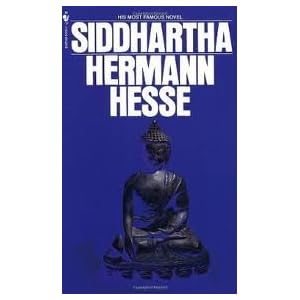
Old Books 1: Siddhartha

I'm going to read through some of my old touchstone books over the next few weeks and report back. This is my first book report...

Siddhartha, by Hermann Hesse, was the first explicitly spiritual book I read that grabbed me. Actually, such books make a pretty short list —explicit spirituality tends to turn me off in prose.

The last time I read it through was probably in college. I wrote a paper for Religion 101 about viewing the novel through the lens of the seven Kundalini chakras. In coonventional kundalini practices, the goal is an upward movement from root (animalistic tooth-and-claw existence, centered in the anal area) up through the body and out of the crown (the top of the head, representing unity with universal consciousness). My point was that the character of Siddhartha begins as a young Brahmin living in those top chakras, without really living into the worldly chakras. Then he shifts course and becomes a successful businessman and lover. Finally, in despair, he finds a middle road, a balance point centered in the direct experience and love of other people. Once his heart is full, he can understand the unity of all...

That was when I was 20.

On rereading it, I tried summarizing the plot to Ingrid, who asked, "Does he have anyone?" And the answer is, not really. Not as a companion. Indeed it's a major point of his journey that he lose his childhood best friend, his lover, and his son. Only the loss of his son really breaks his heart.

Siddhartha's journey is one I think I internalized as a model for a "spiritual path," and it is really a problem... that the path is about going solo. Not that there's anything inherently wrong with going solo, and it does make it more possible to follow the thread through the labyrinth, making the sharp corner turns that that kind of devotion to a path implies. But it does imply that the "true path" is a lonely one.

One of the books I'll be reading later, Diana Wynne Jones's Homeward Bounders, makes as similarly bleak point... the narrator's final line is "But you wouldn't believe how lonely you get."

There's something off about this. I buy Siddhartha's journey as absolutely authentic to who he is, but it's worth noting that his final teacher, the one who shows him how to listen and understand the river of time as one unity, is a widower and ferryman, not a lonely hunter. Vasudeva had been happily married. No, the point is more that this lonely path was Siddhartha's choice. There was something in him that demanded he go solo, not in the path towards full enlightenment.

But I was reminded what a beautiful book this is. At each stage, Siddhartha goes through anguishes of despair, followed by a liberating joy in what is to come and in having become something new. That's the other thing that strikes me now... how many times in his life he felt the joy of "now I've finally gotten it right!" It made me think how great it would be to bottle that specific feeling, separate from actually discovering something new. I'd love to see a philosopher or psychologist of religion looking just at that transformative moment.

I also am sorry for his father and wife and son. I can't imagine it's a great thing to love someone whose spiritual path is higher than you.

Sunday, December 16, 2012

Angry

It's been eleven years since I was this angry, sad, and generally rendered incapable of much useful work. It's shocked me how hard the last two days have been: I mean, yes, it's awful—twenty first graders shot dead in their classroom, and the teachers and principal and so on. Of course it's awful. But there have been lots of awful things over the last ten years.

I'm not alone in this. Something about the events in Newtown have made us as a nation viscerally, boiling-over angry in a way that we haven't seen since 9/11/01. We are grief-stricken in a way we don't know what to do with.

I realized tonight that underneath the weeping for those 20 six- and seven-year-olds is something bigger. I am weeping for my country. I am weeping for the sense that this is becoming a place that isn't mine anymore. But I'm not from anywhere else. This is my home. I'm an American.

It isn't cheap political rhetoric. I spent a few days in Toronto on September, and it was such a startling weight off of me, walking through the streets of a very urban, gritty, full-of-urban-problems city, and not feeling the sense of anxiety that hangs even over my nice hometown of Minneapolis. It was like losing a headache I'd forgotten was there.

Toronto's no paradise. Canada's no paradise. I'm probably never moving to Canada. But I just don't get how so many people, including some of my friends, look at Canada and Western and Nothern Europe, and sneer at universal health care and pooh-pooh the lack of gun violence. I could quote figures at you, but I don't want to here. That's not the point. The point is, I felt more at home and at peace in a strange city than I do in my own front yard. I found that profoundly unsettling.

I am angry, angrier than I've been willing to admit to myself. I cover it up pretty well most of the time, I think—both from others and myself—but what I've seen in some of my liberal friends—the bitterness and fatalism—well, I worry I'm coming down with it too. I love my country, and I want it to be a place of love and peace. That's the picture I grew up with, and as I get older, I realize most of my fellow Americans have either given up on that vision as childish, or never had it in the first place. Instead it's a nation filled with demons needing to be stomped out with vigor. No dream of a better place in the here and now, just a resigned sigh that the battle is never won, and hope for peace in the next world.

But we're the nation that made a great industry out of dreams and fantasies. You'd think we'd know better, that we could learn to harness this great national talent for self-invention, and become a nation of Ray Bradburys. But we're not. We produce Ray Bradburys in a way no other country could, but the fantasies we adopt as our national scripts are full not of magic and hope, but of moralizing and fear and brimstone.

We are not the Greatest Nation on Earth. Whoever said that anyway? It sounds like a P. T. Barnum line. It's cheap boasting, and we've always been good at that. But we've also been good at self-deprecation, and we've been sorely lacking that in our national debate lately, outside of Comedy Central. Maybe we were the greatest nation on earth for a while after World War II, but we didn't even get to enjoy it, because we were so consumed with hate for dissent and fear within ourselves.

I love my country, but my country lies to itself. It hates itself. It's like loving someone with anorexia: their body image doesn't match their body, and becomes an ugly tool of self-mutilation, instead of a guide to positive change.

I am angry that we need revisionists like Howard Zinn (We who live in a nation that prides itself on a clarity and practical know-how. No fancy theories with abstact thises and thats—we leave that to the old world. No outdated, ossified social hierarchies). But we need the Howard Zinns to to show us how we have lied and lied again to ourselves. Lies upon lies. No fancy theories, just plain bald-faced ignorance of evidence and stubbornness. We let people say science is just someone's opinion, and all opinions are equal, and so it doesn't matter a whit how much research and effort you've done.

Jonathan Haidt thinks liberals don't care about sanctity and loyalty and respect. We do. I do anyway. And it hurts to think that what was sacred, what I want to be loyal to, and respect, has been dragged through the filth, betrayed my loyalty, and unearned my respect.

I want to live in a country where ideology is not king, especially ideology that masks rapaciousness and greed. I know we're never going to be rid of ideologues, and that's OK. But the floor of our national sense of self is rotting from underneath, and all we seem to be able to summon the collective will to do is tap on the floor with our foot and complain about the funny smell, and argue about whose job it is to hire the contractor and whether we really ought to pay for new sills.

And weep when twenty children fall through the hole and into the basement, gone forever.